
Cannon Chaos: Silly Shots
World Sports ArenaSimulation
4.466.00 Reviews
- Version
- 4.8
- Installs
- 5.00M
- Age Rating
- Everyone
Screenshots
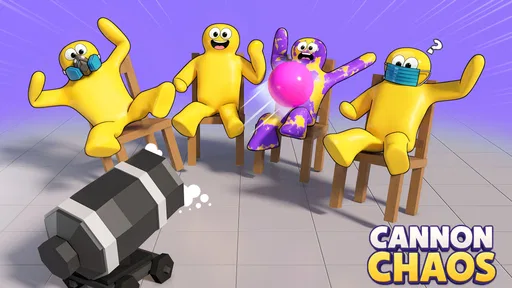
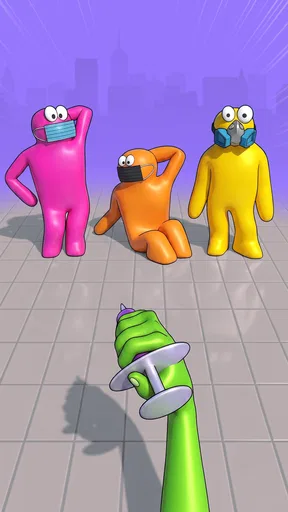
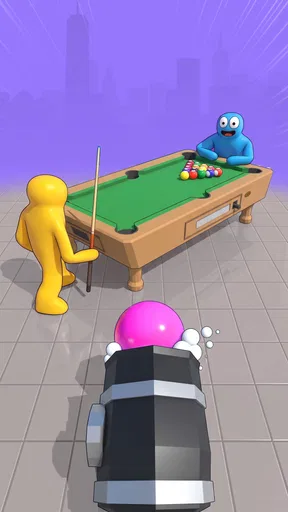
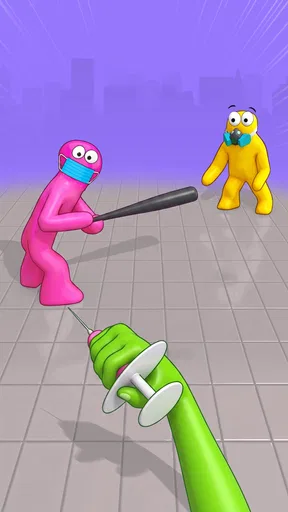
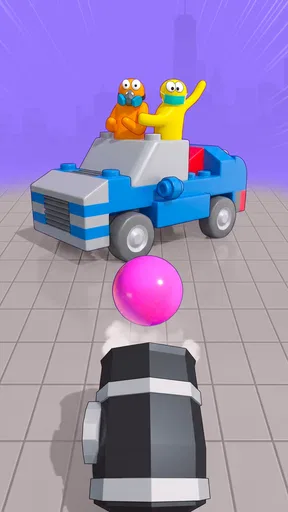
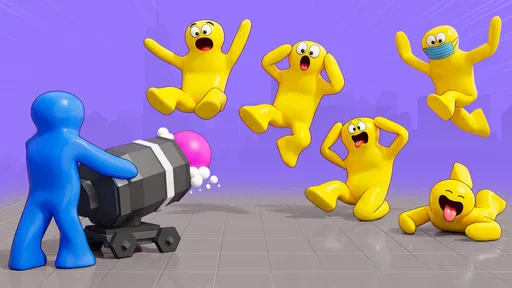
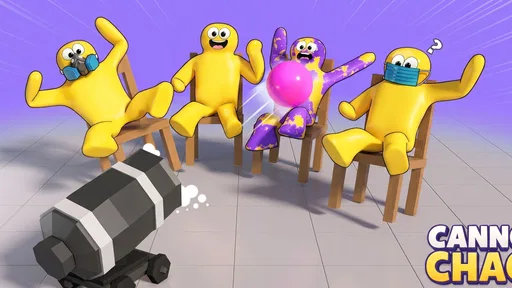
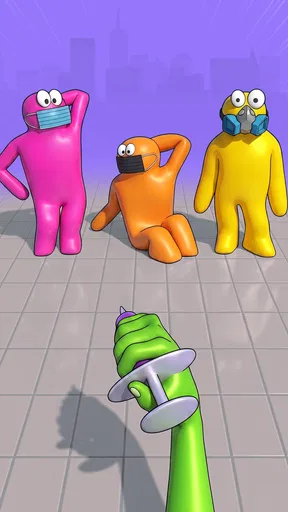
Our Review of Cannon Chaos: Silly Shots
 Analysis by Appyee
I picked up Cannon Chaos: Silly Shots expecting a quick, uncomplicated simulation game, and that is exactly where it fits best. It turns the simple idea of aiming a cannon at goofy targets into a light session that is easy to understand without a long tutorial or a serious commitment. The appeal is immediate: line up a shot, watch the result, adjust, and try again. It is playful rather than intense, and the silly presentation keeps failure from feeling too punishing.
That simplicity makes it especially suitable for a shared phone or tablet. Someone can hand it to another person, explain the basic idea in a few seconds, and let them take a turn. I would not describe it as a deep simulation in the traditional sense, but it does create a small space for timing, positioning, and experimentation. The best way to enjoy it is to treat each round as a short puzzle with a satisfying physical payoff, not as a replacement for a large strategy game.
How Cannon Chaos fits into a shared household
When a game is shared around the house, I find it helps to agree on a simple turn-taking plan before anyone starts. That keeps the focus on comparing ideas and enjoying the shots, rather than on who gets to hold the device longest. It also gives each person room to experiment at their own pace, which matters when players have different ages or levels of patience.
A game that works in short, shared sessions
In my experience, this is the kind of game that works well when a device is passed around during a break. Imagine waiting for dinner, sitting together after school, or taking turns on a tablet while someone else chooses what to play next. One person can attempt a shot, another can suggest a different angle, and the group can react to the result without needing a complicated explanation of rules.
That shared-use quality is more important than it may first appear. Many simulation games ask one player to invest time in building, managing, or learning a system. Here, the central action is much easier to observe. A child can understand the goal visually, while an adult can still enjoy trying to make a cleaner or more effective shot. The game creates a natural “let me try” moment, which is useful when several people are using the same device.
There is also a practical advantage to its self-contained design. You do not need to prepare a long play session for it to make sense. A quick attempt can be enough, and the next person can take over without needing a detailed explanation of what happened earlier. That makes it more flexible than many management or construction simulations, where handing the device to someone else can interrupt a carefully developed plan.
The trade-off is that shared play may not feel like true multiplayer. I would approach it as turn-taking around one screen rather than a coordinated online experience. If your household wants direct competition, persistent teams, or a structured way to compare progress, a dedicated multiplayer game will probably be a better match. This one is strongest when the fun comes from watching the shot and discussing what to try next.
What to decide before handing over the device
Because the game is free, it is easy to install casually, but I still think it helps to establish a few household expectations before making it available on a shared device. Decide who uses the main device, whether people take turns, and whether younger players are allowed to continue playing whenever they want. Those are not game mechanics; they are simple boundaries that prevent a short distraction from becoming an argument over screen time.
I would also keep personal progress and device ownership in mind. On a shared phone, one person’s play can affect what another person sees when they open the game. If several people want separate experiences, agree on whose session is being used rather than assuming the game will provide separate household profiles. That approach avoids promising account separation that may not exist and makes expectations clearer from the beginning.
For a family tablet, I would introduce it as a turn-based activity rather than as an unrestricted personal game. The quick cannon attempts make that easy: one person gets a few tries, then passes the device. This also helps younger players learn that the device belongs to the household, not to whichever person is currently holding it.
Another useful boundary is deciding when to stop. The repeated-shot format can make “one more attempt” tempting, especially when a result feels almost successful. A short timer or a fixed number of turns keeps the game in its best role: a compact break instead of an activity that quietly takes over the afternoon.
Coordinating turns without making the game complicated
The game’s straightforward cannon action gives households several easy ways to coordinate. With younger players, an adult can handle the device while the child chooses the direction or decides when to fire. With older children, players can alternate attempts and explain why they changed their approach. This turns a simple game into a small exercise in prediction and communication without pretending it is an educational tool.
I found that the most enjoyable shared sessions are not necessarily the ones with the highest success rate. They are the ones where players talk through the shot: whether to aim cautiously, whether a riskier attempt might reach a better position, and what the previous result revealed. The game gives those conversations a visible outcome, so even a miss can be useful.
There is a subtle coordination tip here: let the person who is less familiar with the game choose the first attempt, rather than giving them only the “easy” turn after someone else has demonstrated everything. Watching another player can create pressure, while making an independent first shot lets the newcomer understand the controls naturally. After that, advice becomes more useful because it responds to something they have actually tried.
For older children sharing with siblings, I would avoid turning every result into a scorekeeping contest unless everyone enjoys that. The game’s charm comes from experimentation, and constant comparison can make a light activity feel unnecessarily competitive. A better household rule is to celebrate unusual results or clever adjustments, not only successful outcomes.
Age context and trust
The Everyone content rating makes the game broadly approachable, and its cartoon-like premise is much less intimidating than a combat-focused action title. The cannon is the central visual idea, but the tone is silly rather than realistic. That distinction matters when choosing something for a shared family device, particularly if younger users may open games without an adult sitting beside them.
Even so, an age label should not replace ordinary supervision. The rating describes general content suitability, not whether the game fits your child’s habits, attention span, or household rules. I would still show a younger player how to use the game, explain that it is for short turns, and check how they respond to repeated misses. Some children enjoy trial and error; others become frustrated when a shot does not behave as expected.
Trust also includes teaching children what to do when the game asks for attention outside the actual shot. Since I am reviewing it as a free mobile game, I would make a general household rule that children should ask before accepting anything unfamiliar on a shared device, even when the game itself looks harmless. That is a sensible habit for every installed game and does not require assuming a particular prompt or purchase system here.
For a teenager or adult, the age rating is unlikely to be the deciding factor. The more relevant question is whether the player enjoys compact physics-style experimentation. Someone looking for a serious artillery simulator, detailed vehicle handling, or long-term resource management may find the presentation too light. Someone who wants a cheerful distraction that can be understood quickly will probably be more comfortable with it.
Playing thoughtfully instead of just firing repeatedly
I get more enjoyment from a cannon game when each attempt has a small purpose, rather than firing again without thinking. A quick pause to choose one adjustment makes the result easier to learn from and gives other players something useful to discuss. That habit can make even a short session feel more satisfying, while still leaving the game light and playful.
The small decisions behind each shot
The obvious way to play is to aim and fire as quickly as possible, but I got more from it when I treated each attempt as information. A miss can show that the angle is too shallow, that the timing needs adjustment, or that a direct approach is less useful than a controlled one. The game becomes more satisfying when I pause briefly before the next shot instead of repeating the same action automatically.
My first practical tip is to change one thing at a time. If you alter the angle, timing, and general approach together, it becomes difficult to understand what improved the result. A small adjustment gives you a clearer sense of cause and effect. That is a simple habit, but it makes the simulation feel more deliberate and reduces the frustration of random trial and error.
A second useful approach is to use early attempts as scouting rather than treating them as wasted turns. When the game presents a difficult target arrangement, a cautious shot can reveal how the scene responds. Once you understand that behavior, a later attempt can be more ambitious. This is where the game offers more than its short summary suggests: the fun is not only in the impact, but in learning how to set up the next one.
I also recommend resisting the urge to copy another player’s exact technique. A method that works for one person may not feel natural to another, especially on a smaller screen or when holding the device differently. Watching a friend can provide an idea, but personal control and timing still matter. In a household setting, that keeps the activity collaborative rather than turning it into a test of who can imitate the best.
What I liked compared with other simulation games
Compared with city builders, farming games, and vehicle simulators, this is far easier to enter. Those alternatives often reward long-term planning, repeated maintenance, or learning several interconnected systems. Cannon Chaos focuses on a much narrower loop, which means I can enjoy it without remembering a complicated economy or returning at a particular time to protect progress.
That narrow focus is also its main limitation. If you want a world that grows, a character to develop, or a management system that becomes richer over many sessions, this game may feel thin. It does not offer the same kind of ownership as building a town or running a virtual business. Its satisfaction comes from individual attempts and immediate reactions, not from a large personal project.
Against casual puzzle games, it has a more physical feel. The cannon gives each attempt a sense of motion and consequence, while a traditional logic puzzle may depend more on abstract deduction. Against arcade games, it feels less dependent on reflexes and more dependent on observation. That middle ground is appealing when I want something active enough to hold my attention but not so demanding that a short interruption ruins the session.
The game is also a better choice than a complex simulation when the device is shared among people with different experience levels. A long-running management title can become effectively reserved for the person who understands it best. Here, the basic interaction is visible enough for a newcomer to participate quickly. The price of that accessibility is depth, so the choice depends on whether your household values quick inclusion or extended mastery.
Where the experience can become repetitive
The repeated cannon loop is enjoyable for a while, but it can lose its freshness if you expect constant novelty. I noticed that the game works best when I play in bursts and return when I want a few attempts, rather than treating it as a marathon. That is not a serious flaw for a casual title, but it is worth knowing before installing it as the only game on a shared device.
Repetition can also be more noticeable for experienced players who solve patterns quickly. A beginner may enjoy discovering the basic behavior, while a confident player may want more variety or a stronger sense of progression. If your priority is a deep simulation with layers that keep unfolding, I would choose a more substantial alternative. This one is better for immediate amusement and small challenges.
Another point is the balance between advice and independence. In a family session, an adult may be tempted to take over after a child misses several times. That usually removes the most valuable part of the experience. I would offer one suggestion, then let the player try again. The game is simple enough that the player can learn through direct feedback, and taking control too early makes the shared activity less satisfying.
Device fit and practical expectations
The game supports devices running Android 7.1 or later, so it is compatible with a broad range of older Android hardware. That makes it a realistic candidate for a household phone or tablet that is not new enough for demanding three-dimensional games. Compatibility alone does not guarantee identical performance on every device, but the modest concept makes it easier to consider for shared hardware than a visually heavy simulation.
The current version is 4.8, and I would keep the installed copy updated through the normal app store process when updates are available. On a shared device, this is especially useful because different household members may assume they are playing the same version. Keeping one installation current avoids unnecessary confusion when someone notices a change in behavior or presentation.
Since it is free, the main decision is not whether the purchase is worthwhile but whether the game deserves space and attention on the device. I would install it when I wanted a low-commitment simulation with a playful tone. I would skip it when the device user needs a long-form game, a strong competitive structure, or a clearly separated personal profile.
Who should install it, and who should pass?
I recommend it to people who enjoy quick physics-flavored challenges, families looking for an easy pass-around game, and players who like improving a shot through small adjustments. It is also a good fit for someone who finds larger simulation games overwhelming but still wants a game built around decisions rather than pure tapping.
I would be more cautious for players who need persistent progression, detailed customization, or a social system that organizes several users. The same simplicity that helps a child understand the game can leave a veteran player wanting more structure. It is not the right choice merely because it belongs to the simulation category; its particular style is much closer to a compact cannon puzzle than to a full management sandbox.
The developer, World Sports Arena, has positioned the game around accessible cannon action rather than a realistic military experience. That distinction makes it easier to recommend in a mixed-age household, but it also sets the right expectations: this is playful destruction with light decision-making, not a technical training tool or a serious simulation of artillery.
My household verdict
The game has earned its place as an occasional shared-device option for me. Its free price, Everyone rating, and approachable cannon loop make it easy to introduce without a long explanation. The published average of 4.4 from around 40 thousand ratings and more than 5 million installs also shows that it has reached a substantial audience, although popularity does not change the basic trade-off: the experience is intentionally focused and may not satisfy players seeking depth.
My best recommendation is to use it with clear turn-taking and modest expectations. Give each player a few attempts, encourage them to change one variable at a time, and let misses become part of the conversation. That approach brings out the game’s strongest quality, which is its ability to turn a very small action into a shared moment of prediction and surprise.
After spending time with it, I see short, cooperative turn-taking as its real household strength. It is easy to start, friendly enough for a broad audience, and flexible when several people share one screen. I would not choose it as a family’s only game or as a substitute for a deeper simulation, but I would happily recommend it to a friend who wants a silly, low-pressure way to fill a few minutes together.
Verdict
Strengths of Cannon Chaos: Silly Shots
- Simple controls make it easy to start playing immediately.
- Short levels are well suited to quick gaming sessions.
- Silly physics create unpredictable and entertaining moments.
- Bright visuals give the game a cheerful, cartoon-like style.
- The casual format works well for players of different ages.
Limitations of Cannon Chaos: Silly Shots
- Gameplay may feel repetitive after extended sessions.
- Some shots depend heavily on timing and trial and error.
- Progression may offer limited variety for experienced players.
- Ads can interrupt the experience between gameplay moments.
- The game may lack depth for players seeking a challenging shooter.
Other Releases by World Sports Arena
View All
One Shot Soccer: Swipe & Score
Sports4.6
Similar Picks in This Category
View All
Truckers of Europe 3
Wanda Software4.3

Town Building Life Simulator
XGame Global4.2

Fidget Toys Trading・Pop It 3D
Freeplay Inc4.7

Sculpt People
CrazyLabs LTD4.4

Scary Teacher 3D
Z & K Games4.2

Hair Tattoo: Barber Shop Game
CASUAL AZUR GAMES4.3
Frequently Asked Questions
What is Cannon Chaos: Silly Shots about?
Cannon Chaos: Silly Shots is a casual physics-based game centered on launching characters or projectiles from a cannon and trying to hit targets, overcome obstacles, and create amusing chain reactions. Its appeal comes from simple controls, playful visuals, and unpredictable results. Each attempt encourages experimentation, since adjusting the angle, power, and timing can produce very different outcomes.
Is Cannon Chaos: Silly Shots easy to play for beginners?
Yes, the game is designed to be accessible even if you have little experience with physics or arcade games. The basic idea is straightforward, and the controls are generally simple to understand after a few attempts. However, later challenges may require more careful aiming and timing. Players who enjoy trial and error should find the learning curve entertaining rather than frustrating.
Does Cannon Chaos: Silly Shots work offline?
The core gameplay may be suitable for playing without a continuous internet connection, which is convenient for short sessions while traveling or when mobile data is unavailable. Nevertheless, some features can depend on connectivity, including advertisements, updates, cloud-related services, or optional online content. It is best to open the game once while connected before relying on it for completely offline play.
Does the game contain advertisements or in-app purchases?
As with many free-to-download mobile arcade games, Cannon Chaos: Silly Shots may include advertising and optional purchases. Ads can potentially appear between levels or after an attempt, while purchases may offer bonuses, cosmetic items, or other conveniences depending on the version available in your region. Check the store listing and payment settings before downloading, especially if children use the device.
Is Cannon Chaos: Silly Shots suitable for children?
The colorful presentation, humorous action, and uncomplicated mechanics make Cannon Chaos: Silly Shots potentially suitable for younger players. Still, parents should review the age rating, advertising behavior, and any in-app purchase options shown on the Google Play Store or App Store. The game’s cartoon-style cannon action is intended as playful entertainment rather than realistic violence, but supervision is recommended for younger children.
Play our best games!


